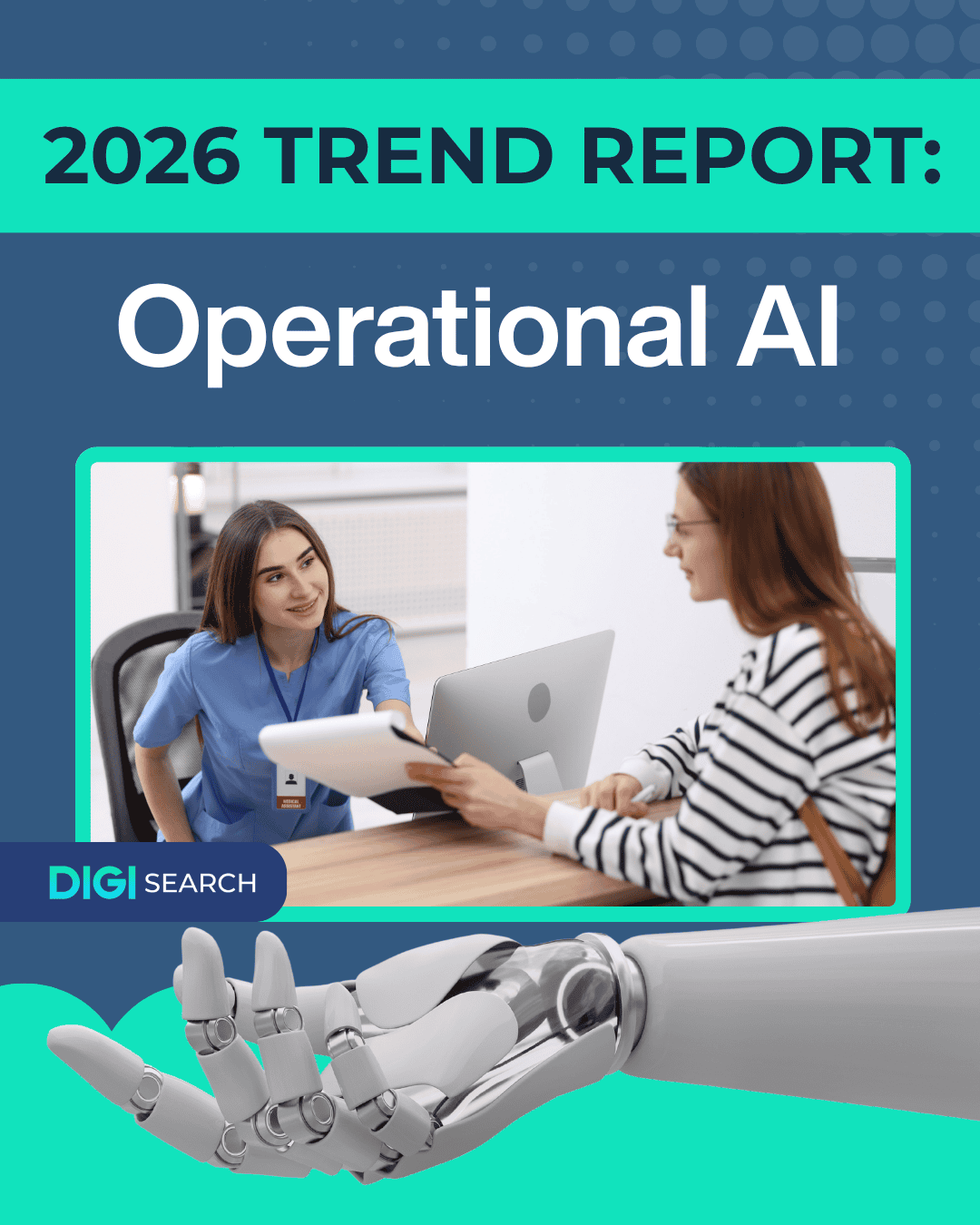
The dental front desk handles more simultaneous tasks than almost any other role in the practice. Appointment scheduling, insurance verification, patient follow-up, intake forms, reminder calls, and billing questions all converge at the same desk, often at the same moment.
The bottleneck is not effort. It is not attitude. It is capacity.
In 2026, a growing number of dental and medical practices are addressing that capacity problem not by adding headcount but by deploying what industry observers are calling “operational AI”: artificial intelligence tools built specifically for the day-to-day running of a healthcare practice. This trend report explains what operational AI is, what it handles well, and why practice owners thinking seriously about patient acquisition should care about what happens after the marketing works.
What Operational AI Means, and What It Doesn’t
Operational AI refers to AI systems applied to the administrative and communication functions of a practice. Scheduling assistants that handle online booking without staff intervention. Automated follow-up sequences that re-engage patients who inquired but did not book. Intake forms that collect information before the patient arrives. Reminder systems that reduce no-show rates through timed outreach across SMS and email.
This is distinct from clinical AI, which involves diagnostic tools, imaging analysis, and treatment planning software. Both categories are developing rapidly. But operational AI is more immediately accessible to most practices, requires no clinical decision-making on the AI’s part, and produces measurable administrative improvements on a short timeline.
Practices that encountered earlier, rougher versions of these tools and were not impressed should know that the product category has matured considerably. The gap between what these tools delivered in 2022 and what they deliver now is significant.
Four Functions Where Operational AI Is Making a Measurable Difference
Online scheduling and booking. AI-powered scheduling tools allow patients to book, reschedule, and confirm appointments through a practice website or SMS without waiting for a staff member to respond. For practices with significant after-hours inquiry volume, this means patient intent converts to a scheduled appointment rather than a voicemail returned the next morning, by which point the patient may have already booked elsewhere.
Automated follow-up for unscheduled inquiries. When a patient submits a contact form or calls and does not schedule, the follow-up window is short. Operational AI initiates a structured sequence automatically: a message within hours of the inquiry, a second touchpoint within 48 hours, and continued outreach if no response is received. The sequence runs without manual input from the front desk team.
Pre-appointment intake and communication. Collecting patient information before arrival reduces check-in friction, improves data accuracy, and signals professionalism to new patients. Automating this step frees front desk staff to focus on in-person interactions during peak hours rather than managing paperwork during the appointment.
Recall and reactivation outreach. Patients overdue for a recall appointment represent recoverable revenue that many practices leave uncaptured. Operational AI runs continuous reactivation outreach without requiring a team member to manually work through a recall list.
Why This Matters for Patient Acquisition Specifically
DIGI Search’s focus is patient acquisition: attracting the right patients to a practice at the moment they are ready to book. That work involves advertising, SEO and GEO (Generative Engine Optimization), content, and reputation management through the SmartReach™ methodology.
But patient acquisition only produces results if the practice is equipped to convert the interest that marketing generates.
A prospective patient who submits a contact form on a Tuesday evening and receives a response on Wednesday afternoon has had time to fill out inquiry forms at two other practices. A practice whose follow-up is slow, inconsistent, or dependent on when a staff member has a free moment is leaking booked appointments at every stage of the funnel. This is not a marketing problem. It is an operational one that defeats the marketing investment.
Operational AI closes that leak. When practice infrastructure runs efficiently, the patients SmartReach™ attracts actually become patients.
What to Look for in a Platform
The market for practice management and patient communication platforms is active, and several established options serve the dental and medical context. The right fit depends on the practice’s existing systems, patient volume, and growth goals.When evaluating any operational AI platform, the relevant questions include:
Does it integrate with the practice’s existing management software? A tool that requires manual data re-entry defeats most of its purpose.
Does it comply with HIPAA requirements for patient data handling? Any platform that touches patient information must have appropriate Business Associate Agreements in place and must meet the security standards the practice’s compliance posture requires.
Does it create the patient experience the practice wants to project? Automated communication should feel warm and personal, not robotic. Timing, tone, and message content should reflect the practice’s identity.
Is there a clear onboarding and support pathway? Well-designed tools still require thoughtful implementation. Practices that have found operational AI frustrating in the past often attribute that frustration to rushed setup rather than the technology itself.
The 2026 Context
The practices integrating operational AI most effectively in 2026 are not doing so because they were early technology adopters. They are doing so because the cost of not doing it has become visible.
Patient expectations for response speed have shifted alongside consumer technology in every other category. The front desk remains essential. The team members working it bring clinical knowledge, warmth, and judgment that no AI replicates. Operational AI does not replace the front desk. It removes the tasks that do not require a human to complete them, so the humans can focus on the interactions that genuinely need them.
For practice owners thinking seriously about growth in 2026, operational AI is not a trend to observe. It is an infrastructure question to answer. And the answer shapes how effectively any patient acquisition investment performs.
To explore how DIGI Search’s patient acquisition strategies connect with practice operations and infrastructure, schedule a discovery call.